

Intern Reflection: Guess who’s back (back again)?
I’m Sanika, and last year I was the Open Textbook Creation Intern for seven months working on Open Educational Resources and process documents for the new textbook service. I am back for the summer and this year I’ve gone technical with it, and as the OER Web Migration intern, I’ve thrown myself into the complex technological programming code world of… Microsoft Excel. I may be working for an IT company but at my heart I am a word person, and Excel allows me to excel at collating words in a giant web audit.
Watch this space, because Open.Ed will be getting a shiny new website that is integrated with the larger University web estate, using EdWeb2 and Drupal to migrate over ten years of brilliant content! This hefty task has been on the to-do list for the past five years and I am very excited to finally help it get started. The current website holds over 1000 individual posts that curate open educational resources, highlight open policies for learning, blog the work of the OER team, and position the University as a leader in open education.
In the first two weeks of my internship, I’ve gone through hours of training to prepare me for the daunting job, learning the ropes of EdWeb2 and learning about how to create effective, accessible and informative digital content. These training videos are made available to staff and students across the University, with self-paced and instructor-led courses delivered by the Digital Skills, Design and Training section and the Website and Communications section.
I’ve had a lot of experience with WordPress, Wix and OJS/PKP as content management systems from my roles with the edi magazine as Editor in Chief and the Edinburgh Student Literary Journal as Publications Manager, so working with EdWeb2 as a website builder wasn’t completely alien to me. I was very impressed with how dynamic all of the elements were behind-the-scenes, as well as how polished and official my training site looked when previewing. Fonts and colours on EdWeb2 fit perfectly with the rest of the web estate, and the cohesive University branding appears immediately. I put together a mock-up of what the Open.Ed site could look like, testing out all of the different options for content and organisation, and generally just familiarising myself with the system itself. I learn best when I can just throw things onto the wall and see what sticks, and this approach led me to discovering a slight issue in the EdWeb2 system regarding the padding with feature boxes and cards, which is a long way of saying I whacked things together and then confused everyone when it aligned unevenly. On the bright side, the actual programmers have been informed about this minor, and until now, unknown, issue.
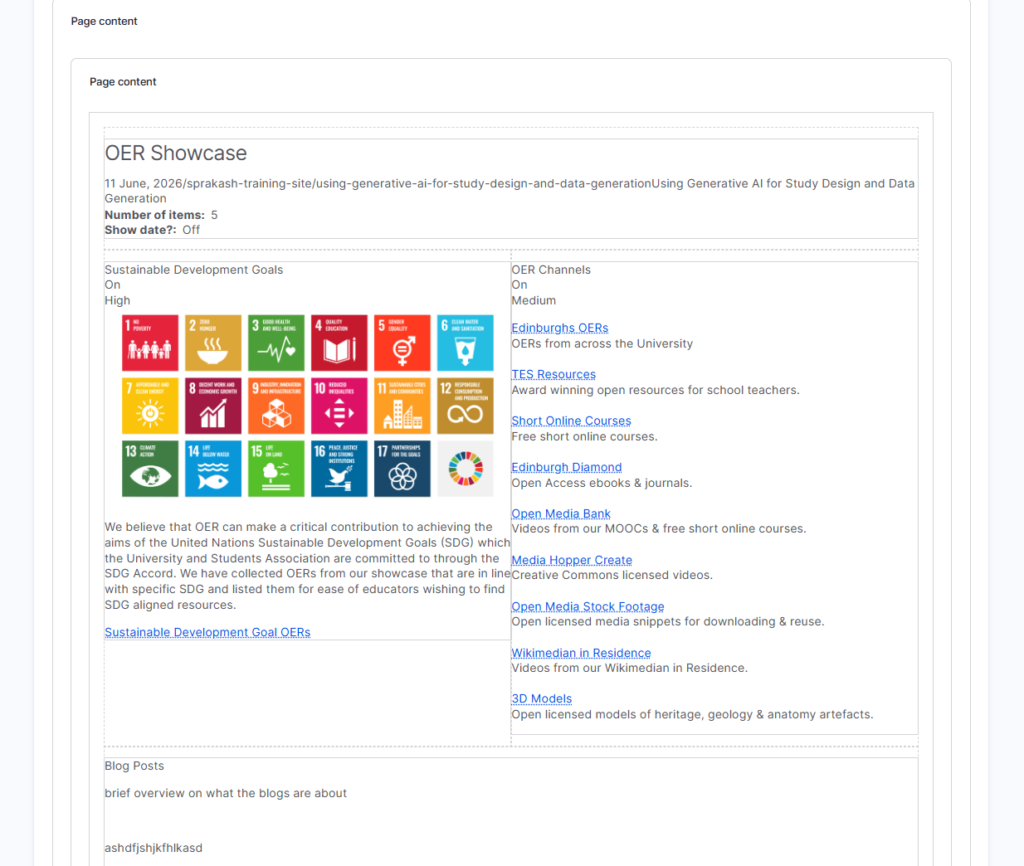
Behind the scenes screenshot of what EdWeb2 looks like from an editor perspective.
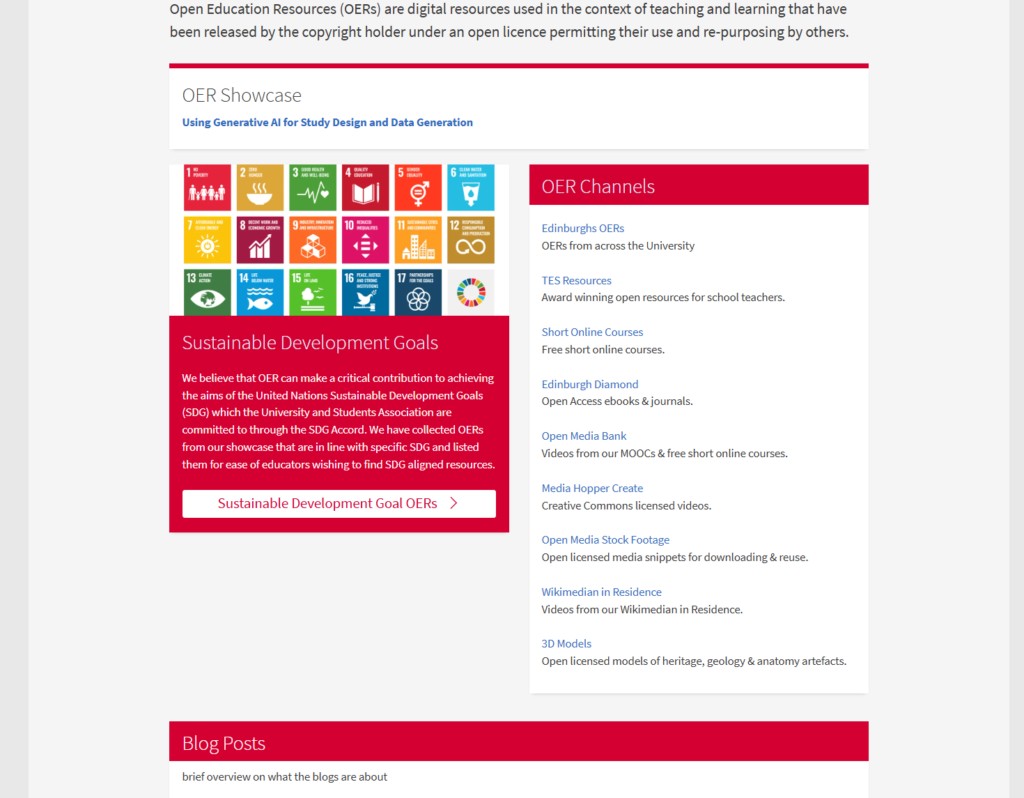
Screenshot of the previewed training site.
From there, I moved onto Excel where I confused myself further with mysterious red circles and lots of LinkedIn Learning tutorials. The majority of my job is a tedious yet relaxing job of auditing every single post on the website; this involves collective metadata, proofreading articles, checking links to make sure they haven’t broken over the years, checking licenses to ensure they are still available openly, deciding which articles will fall into the new classification system, recording site views to justify keeping the article and so on. Excel is truly a powerhouse of a software, but wrangling it between web and desktop, as well as this muddle of data validation circles does feel like corralling an unruly child (and I am an older sibling).
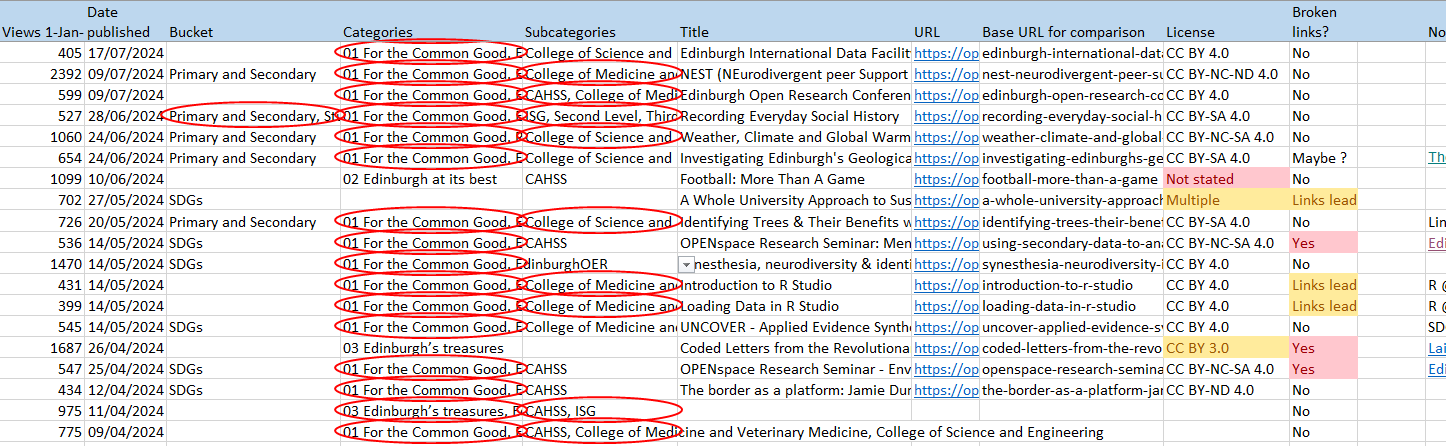
Sample of the sitemap that I am slowly filling up with metadata and required checks. Visible headings read: views, date published, bucket, categories, subcategories, title, URL, base URL for comparison, license, broken links, and further notes. Three columns have bright red circles around individual cells. I don’t know why this is.
At about three weeks into my internship, I can safely say I am less confused. The web audit is calming and repetitive work, and hours can go by just inputting data while listening to music. I’ve been able to take short courses to improve on the skills that are crucial in jobs that I want to apply for after I graduate, giving my applications a competitive edge and actively working towards my goals. I’ve even decided to pick up French again as a European language to use professionally, which is a desired skill in arts management and publishing. As I’m about to enter my final year of my MA (Hons) History of Art and English Literature degree, I am grateful for the opportunity to work again for the University over the summer, and equipping myself with experiences that will be indispensable once I graduate and go off into the real adult world.
